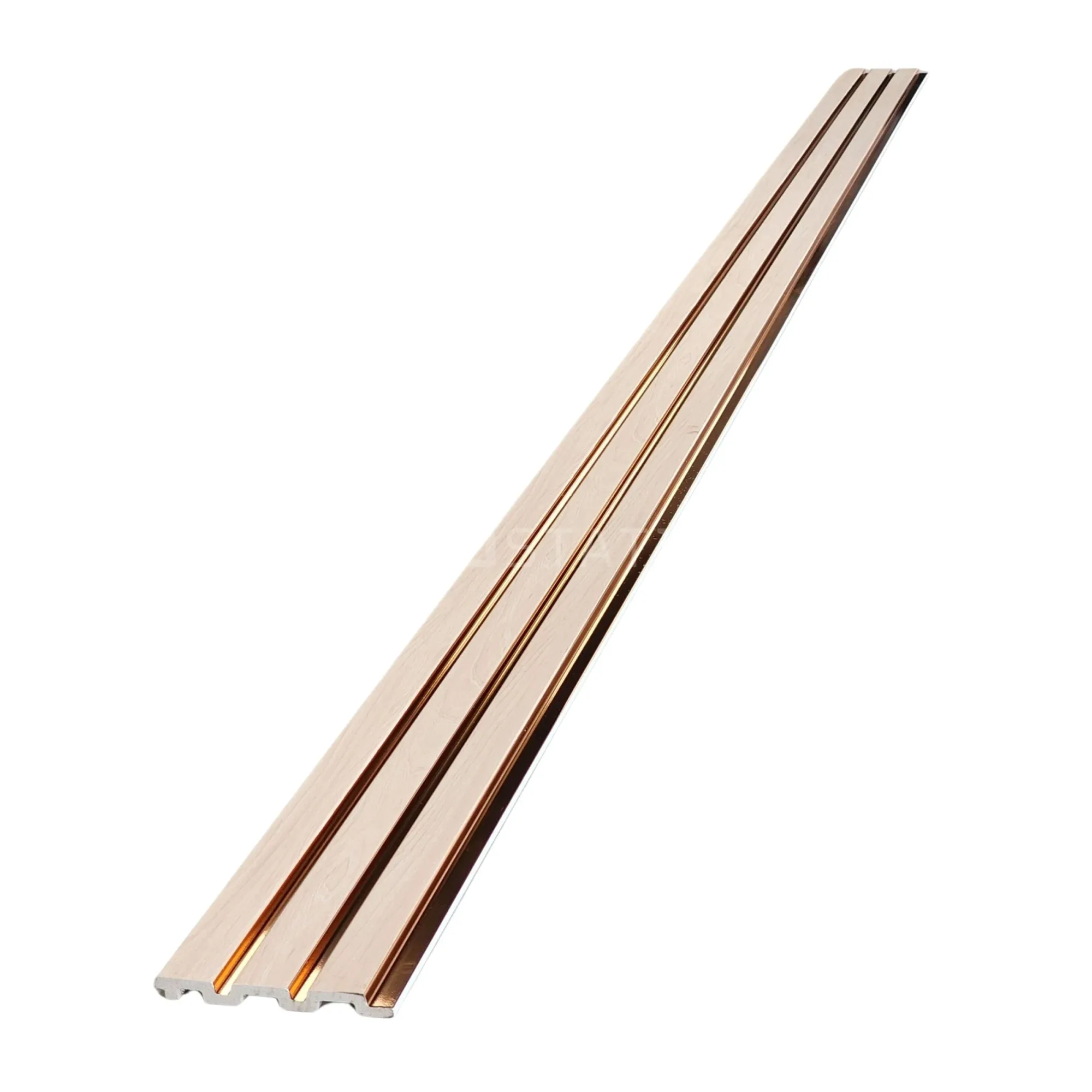
Can these panels be installed on both walls and ceilings?
Yes. Our lightweight PVC tongue-and-groove boards and acoustic felt slat systems are qualified for dual wall and ceiling use. Because they are far lighter than real timber or ceramic, they stay secure overhead when fastened into the joist or drywall infrastructure with construction adhesive plus mechanical finish fasteners.
What are the best practices for a flawless DIY installation?
Acclimatize WPC, timber and acoustic panels flat in the room for at least 48 hours before installing.
Prepare the substrate: it must be 100% dry, sound, and free of debris, dust and glossy or failing paint.
Use the Dual-Secure Method for ceilings and feature accents — high-tack construction adhesive plus deep mechanical fasteners driven down the hidden valley channels.
Laser-verify the very first (starter) panel. A 1 mm deviation at the start multiplies across the whole layout, so getting the starter dead level and plumb is the single most important step.
Do outdoor panels get faded or damaged by the sun?
Our outdoor composite lines carry a UV-inhibiting capped co-extrusion shield that blocks UV and prevents degradation, bleaching and peeling. Some minor colour settling can occur over a decade of permanent, high UV exposure, but the capped technology avoids the intense fading you see on basic, unshielded plastics.
Are PVC panels safe to use behind a kitchen stove or near a fireplace?
Our PVC and WPC lines carry fire-retardant listings, but they are engineered polymer composites and must never be exposed to roughly 60°C (140°F) constant heat or to direct flame. Behind a range top, keep a 6-inch air clearance from the burner zone, or fit a stainless-steel or tempered-glass splash guard over that zone. Keep the panels away from the firebox opening of a fireplace. When in doubt about clearances, follow the appliance manufacturer's specifications.
How do I finish the exposed raw edges or corners of a fluted wall?
Use matching, colour-coordinated finishing trims. We offer L-shape metal trims, universal end-caps and exterior corner mouldings across the collections to cap raw edges and turn corners cleanly. Alternatively, sand the cut edges with a fine grit and touch them up with a colour-matched paint or a wood-finish marker so the trimmed edge disappears.