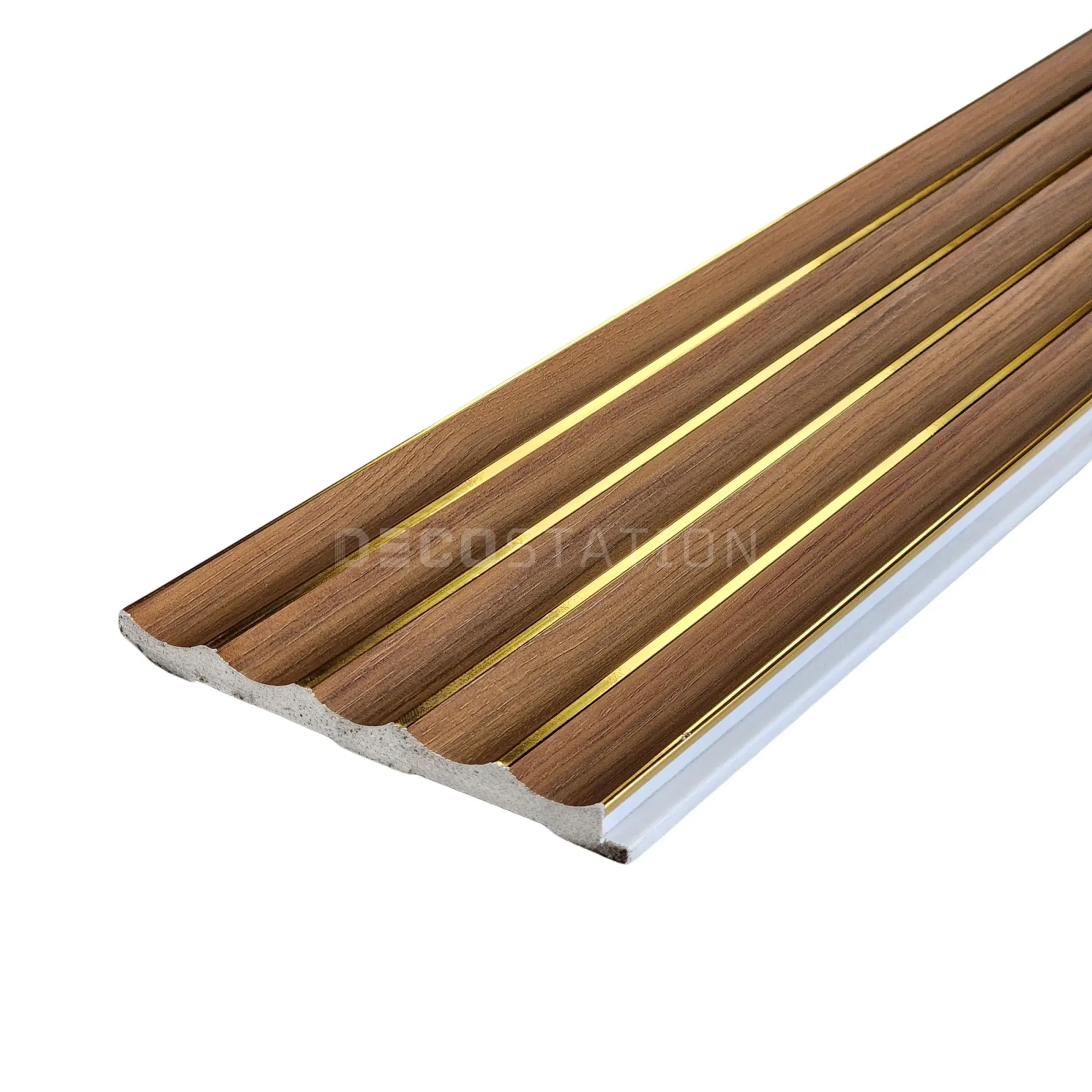
Can peel-and-stick tiles be installed over existing ceramic tile or textured drywall?
Smooth, clean drywall is ideal.
Existing ceramic works only if it is flat, sound and degreased (a TSP wash) — but deep grout lines will telegraph through and sink, so a very tiled surface is not a great candidate.
Textured drywall (knockdown or orange peel) is not compatible: the adhesive can only grip the high points. Sand the texture flat and clean it first.
How do you cut and trim fluted slats and PVC panels without chipping them?
For solid PVC and UV Marble sheets: score the face three to four times with a heavy utility knife against a metal straightedge, then snap the panel along the score.
For fluted acoustic wood slats: use a fine-tooth miter saw or jigsaw fitted with a 60-tooth-or-higher carbide laminate blade, cutting through the front face. Cut the felt backing separately with a fresh utility blade or carpet shears.
Pro tip: run a strip of low-tack painter's tape along the cut line to keep the veneer edges crisp and chip-free.
How do I calculate exactly how many panels I need?
Work out your wall area, then divide by the coverage of your chosen panel:
Total Sq Ft = Height (ft) × Width (ft)
Divide that total by the per-box coverage listed for your chosen line to get the number of boxes. Then add a 10–15% overage buffer to cover cutting waste, trimming, corners and the occasional mistake. Ordering the buffer up front means every box is from the same production batch, so colour and texture match perfectly.
How do I clean and maintain the panels?
For everyday care, wipe the panels with a soft, damp cloth. PVC and UV marble surfaces are waterproof and easy to keep clean — a little mild soapy water lifts most marks, then wipe dry. Avoid abrasive scouring pads and harsh solvents, which can dull or scratch the finish. For felt-backed acoustic panels, keep them dry and simply dust or gently vacuum the felt with a soft brush attachment rather than getting them wet. With this basic care the panels stay looking new for years with no sealing or refinishing required.
What should I do if my panels arrive with minor edge damage from shipping?
Oversized, heavy materials can pick up minor cosmetic edge or packaging marks in transit. In around 95% of installs those perimeter edges are trimmed away anyway when the panels are cut to fit, so a small scuff on an edge rarely affects the finished wall. For deep, noticeable damage on the face of a panel, photograph it immediately and contact support — we'll arrange a fast exchange.